What happens when you bring together gender researchers and livestock modellers to work on a collaborative ‘solutions group’ project?
In the second half of 2025, the Dgroups Foundation worked with the SEBI-Livestock team to facilitate an LD4D Solutions Group on Gender Considerations in Livestock Modeling. The goal was simple but ambitious: to create the conditions for a diverse group of researchers, modellers, and gender specialists to think together, learn from one another, and tackle a shared challenge.
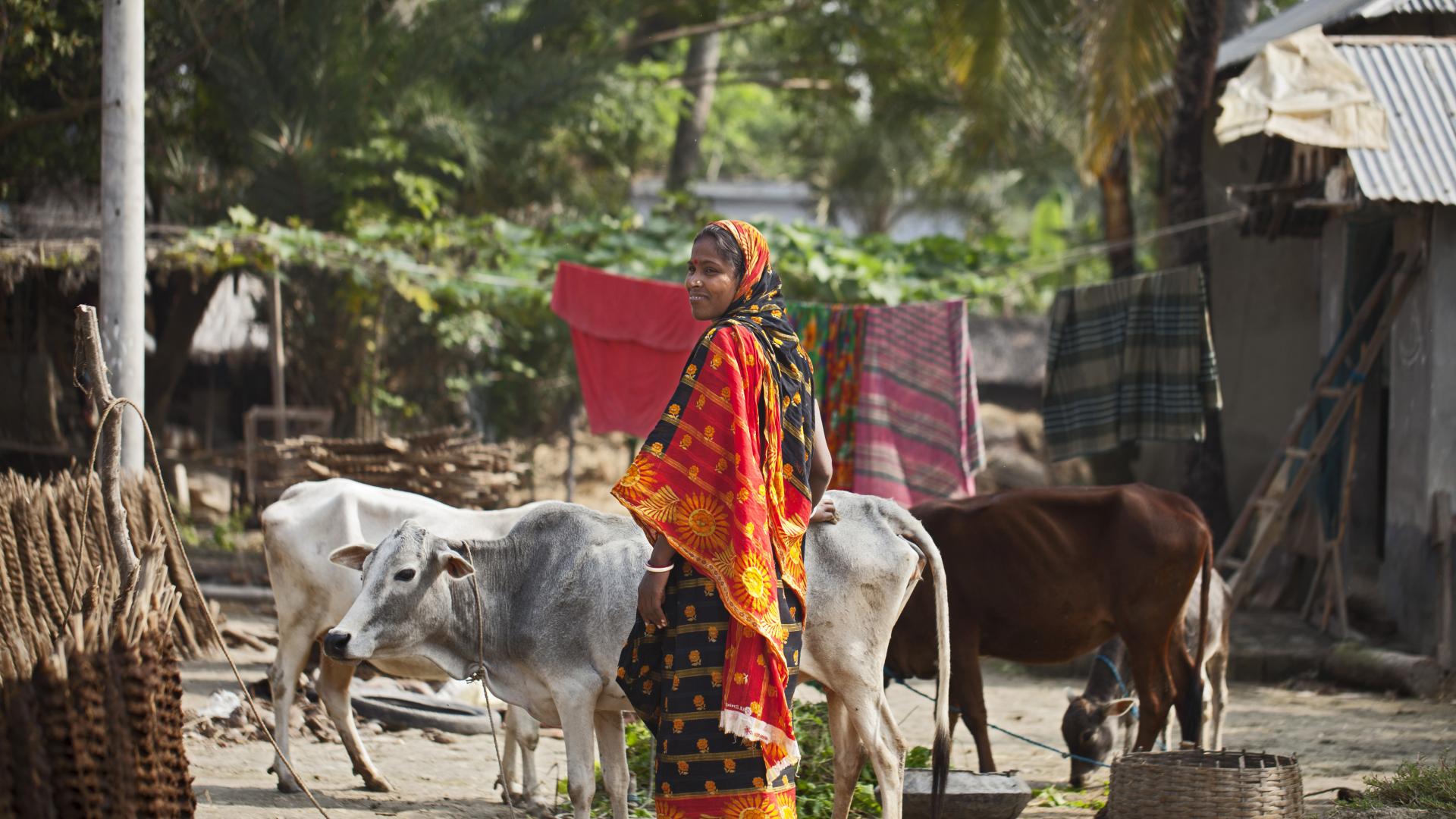
SEBI-Livestock works to mobilise and improve data and evidence so the livestock community can make better investment decisions – ones that improve livelihoods for smallholders in low- and middle-income countries. Much of the data used in livestock models focuses on things like disease patterns or productivity. But there is growing recognition, from both gender researchers and modellers, that ignoring gender in these models can unintentionally reinforce existing inequalities along livestock value chains. Integrating gender considerations opens up opportunities for decision makers to design interventions that better support both women and men whose livelihoods depend on livestock.
Why gender matters in livestock modelling
The Solutions Group approach brings together people from different organisations and disciplines for a fixed period of time to work collaboratively on a specific issue. For this group, Dgroups Foundation Associates Jessica Ball and Pier Andrea Pirani worked closely with the SEBI core team to design and facilitate three online workshops and one hybrid workshop.
Creating the conditions for collaboration
The first workshop laid the groundwork for collaboration. Alongside developing a shared understanding of the context and challenge, the group took time to surface a set of shared values – openness, creativity, adaptability, and trust – that shaped how participants chose to work together. These values became an important reference point as the group began grappling with the complexities of integrating gender into livestock modelling.
Understanding the problem from the user’s perspective
Using elements of a human-centred approach, the group then worked on defining the problem more clearly. Who is affected by this challenge? Where are the tensions? What are the gains if things are done well? Decision makers who use livestock models were identified as the primary “users.” To help ground the discussion, gender researcher Alessandra Galiè shared lessons from earlier initiatives that successfully engaged decision makers around gender integration. Her reflections brought several key insights to the fore:
- Integrating gender into livestock models works best when decision makers are involved early and consistently, and when efforts align with national priorities and policy needs.
- Building trust, framing gender equity in ways that resonate, whether through productivity, sustainability, or social impact, and demonstrating tangible, scalable results are critical to achieving buy-in.
- Clear purpose, flexible messaging, and evidence of longer-term impacts (for example, on nutrition or education) all help models gain traction with donors and government partners.
Agreeing on a shared direction
By the end of the first workshop, the group had built a shared understanding of both the challenge and the conditions needed for meaningful collaboration. Participants agreed on the importance of developing a shared vision to guide the work as ideas and possible solutions began to take shape.
Unpacking assumptions and refining the challenge
The second workshop focused on refining that vision and sharpening the challenge. As is often the case in interdisciplinary work, this stage surfaced different assumptions and interpretations. Rather than being a barrier, these moments became productive. The group realised that core gender concepts such as “do no harm” and “gender equality” needed to be unpacked and translated into language and approaches that could be meaningfully applied within livestock models and decision-making processes. Through iterative discussion, participants returned to an earlier insight: gender equity needs to be planned for deliberately. This allows models to tell a fuller, more accurate story – one that helps decision makers not only to pursue economic gains, but also to navigate trade-offs, meet international standards, and avoid unintended harm.
Making space for reflection and iteration
As the group began looking ahead to a potential piloting phase, it became clear that more time was needed. An additional virtual workshop was added to the process. This focused on clarifying and refining agreed gender indicators, such as “do no harm” and “support gender equity,” and how these could be operationalised in practice. It also created space to pause and reflect on how the group was working together. These moments of reflection proved essential in keeping the process grounded and adaptive.
From learning to next steps
The fourth workshop aimed to bring the learning together and move towards more concrete outputs. At four hours, it was the longest session and allowed participants to dive deeper into the nuances of the challenge. This time helped the group narrow its focus and agree on a clearer direction forward, including plans for a two-day in-person workshop. It reinforced the value of combining online and face-to-face interactions when working through complex, collaborative processes.
What worked and what could be improved
While the Solutions Group will continue into 2026, it is worth pausing to reflect on what worked well and what could be improved. A few challenges stood out:
- Limited participant time, given other work commitments, suggests we need to more deeply and clearly manage roles and expectations, including what can actually be achieved in virtual discussions.
- As we came to better understand the breadth and complexity of the challenges, we could benefit next time from more attention early in the process to explore root causes, consult users, and prioritise key issues.
- Short virtual sessions, while attractive in busy schedules, sometimes limited deeper thinking and alignment, suggesting we need to consider longer sessions, offline tasks, asynchronous interactions, or more differentiated roles.
Why collaboration needs more than goodwill
These reflections highlight an important distinction between sharing knowledge and truly collaborating. Collaboration requires specific conditions, behaviours, values, and resources. Facilitation can help create the right environment and model collaborative practices, but time and funding ultimately need to be recognised and supported by those organising and participating in the process.
The Dgroups Foundation is grateful to work with partners who value iterative learning, reflection, and collaboration as more than a box-ticking exercise. We look forward to the next phase of the Solutions Group: Gender Considerations in Livestock Modeling.